THE FASHION OF THE CIVIL RIGHTS ERA: THE CLOTHES OF REVOLUTION
BY DAVID ASAMOAH PHOTO COURTESY OF UNSPLASH
The latter half of the 20th century, particularly the 1960s, marked a pivotal period of cultural, political, and social revolution that shaped the world as we know it today. The Civil Rights Movement, beginning in 1954 and continuing throughout the ‘60s, challenged century-long-held beliefs and practices, turning the tide of a century and marking a new age of American culture.
Behind the black-and-white photographs from that era existed a world that was in some ways profoundly different from now; yet, it still shared similarities, particularly through its use of fashion. Just as artists and activists today use fashion and uniforms to aid in their work, dress was a significant part of the Civil Rights Movement that cannot be overlooked. The clothing of the Civil Rights Movement and its subsequent movements reveal a story of Black pride, power, and creativity, and the fight against oppressive systems that deprived many of their human rights.
One notable aspect of the civil rights era was the suit. When looking back at photographs, we see images of men with arms linked during protests, always in tailored black or dark suits with slim black ties and white collared shirts. This look is often tied to marches during this era, one example being the March on Washington. This black-suit-plus-skinny-tie look seen throughout the movement, projects a powerful aura of solemnity and sophistication. Dr. Martin Luther King Jr., one of the most prominent leaders of the Civil Rights Movement, wore this look at protests, marches, and speeches. People often wore buttons with slogans such as “Freedom Now,” or “March on Washington for Jobs & Freedom,” which were the memorable buttons worn at the March on Washington that featured a visual of a Black and white hand shaking hands.
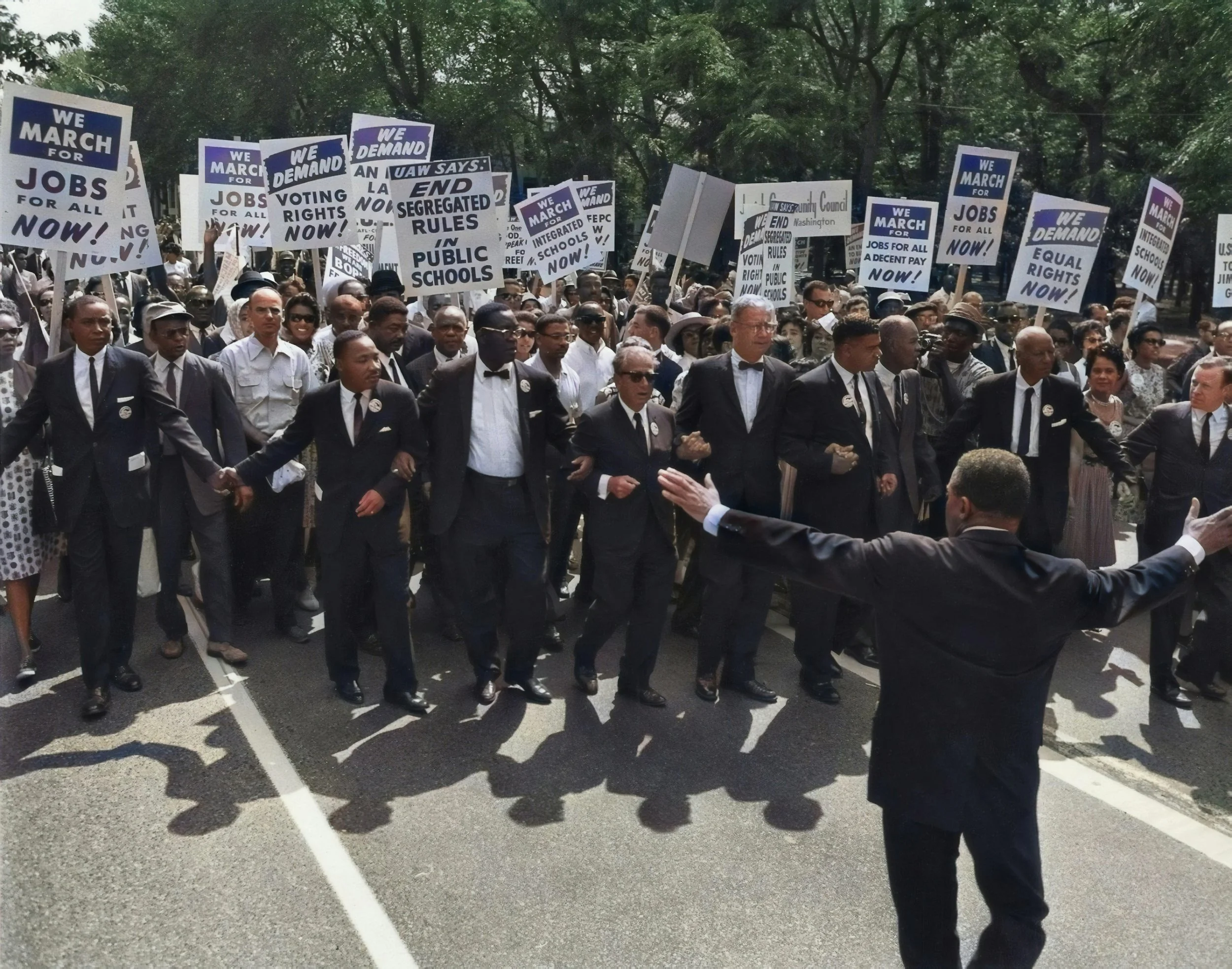
The March On Washington on August 28, 1963. Courtesy of Unsplash
In her article “Dress and Protest: Fashion Hasn’t Been a Bystander in the Black Civil Rights Movement,” Tara Donaldson notes the complex politics of the era by referencing image activist and writer Michela Angela Davis. “Any Civil Rights movement of that time, respectability and dignity was paramount,” Davis said. “Everyone was dressed to promote dignity.”
People would dress in their “Sunday best,” or clothes they would wear to church. People also often wore dresses, nice blouses, and ties. This illustrates the significant role that appearance and presentation had in the Civil Rights Movement, and how details such as clothes — though appearing small — were critical in promoting the agenda of the movement. People also wore trench coats during this era, such as the raincoat John Lewis wore on the Selma Bridge on Bloody Sunday, a practical but powerful look that Lewis recreated at the 2015 Comic-Con International in San Diego.
It is also impossible to understate the role that the media had during the Civil Rights Movement, as it was how millions of people would see the violence perpetrated at peaceful protests. One example of this is the infamous march in Selma, where 600 people marched on the Edmund Pettus Bridge when they were stopped by Alabama state troopers, who brutally beat the unarmed protesters with clubs and sprayed them with tear gas. Nearly 50 million people watched this on TV, and it is now known as “Bloody Sunday.”
Davis notes how these images created a “juxtaposition,” as she calls it, saying “the juxtaposition of violence and elegance was very intentional and very powerful,” in an interview with Women’s Wear Daily. Seeing people peacefully march for their dignity in their Sunday best and be violently treated created a jarring and upsetting juxtaposition. Seeing African Americans continue to be poised, dignified, and demand their rights despite inhumane treatment was poignant and powerful, and these images resonate with viewers to this day.
Workwear was common during the Civil Rights Movement, popularized by organizations such as the Student Nonviolent Coordinating Committee, a significant force in the fight against segregation. Denim was another popular option, and the art historian Caroline A. Jones writes about this emergence, saying, “It took Martin Luther King Jr.’s March on Washington to make [jeans] popular.” Over 250,000 participated in the march, and this included many Black southerners who wore denim overalls. Sharecroppers during the Reconstruction historically wore denim, as well as contemporary blue-collar workers; so, wearing this denim in the movement represented the lived experience of millions of African Americans and their ancestors striving for freedom.
The earlier fashion of the Civil Rights Movement is considered a form of respectability politics through its neatly tailored clothing and presentation. Although the mainstream Civil Rights Movement had gained significant momentum and victories by the mid-1960s, such as the Voting Rights Act of 1965, many Black Americans had become disillusioned with the mainstream Civil Rights Movement because they felt it did not properly address issues of poverty or housing discrimination, leading to the rise of the Black Power Movement.
The Black Power Movement represented a different approach to Black liberation, straying from respectability politics and white standards. Black Power emphasized self-determination and economic independence rather than integration. Inspired by civil rights leader Malcolm X, the Black Power Movement emphasized Black pride, and this can be seen in the fashion and uniform of the era.
A key force in the Black Power Movement was the Black Panther Party For Self-Defense, founded by Huey P. Newton and Bobby Seale in 1966. The Black Panther Party emphasized “self-defense” and protection from police brutality in Black communities. This is seen in the Black Panther uniform: a leather jacket, dark sunglasses, and arguably the most memorable, a beret.
According to the Smithsonian article “More than a Fashion Statement: The Symbolism behind the Black Panther Party Uniform,” Seale and Newton were inspired to add berets as part of the Black Panther uniform after seeing French Resistance Fighters during World War II wear them. Berets are a part of military uniforms around the world, representing the goals of self-defense within the organization. Berets have been cited as a symbol of nonconformity and revolution, and have also been donned by artists for centuries, symbolizing the creativity and militant passion of the Black Panther Party. This look, full of dark leather jackets, shades, and berets, was far different in comparison to the “Sunday best” fashion of the earlier Civil Rights Movement, and it projected a far more militant aura. It emphasized the powerful role that the party had in protecting and uplifting their communities.
Out of the larger Black Power Movement came the “Black Is Beautiful” movement, a movement that celebrated the variety of skin tones, hair textures, and features that African Americans shared. Popularized by photographer Kwame Brathwaite through his photography, this movement spanned the 1960s into the 1970s, and its legacy endures to today. The movement embraced afros and natural hair, as well as Black fashion, African aesthetics, Black music, and Black art. Activists such as Angela Davis wore their afros out, a powerful symbol of Black pride and Black resilience.
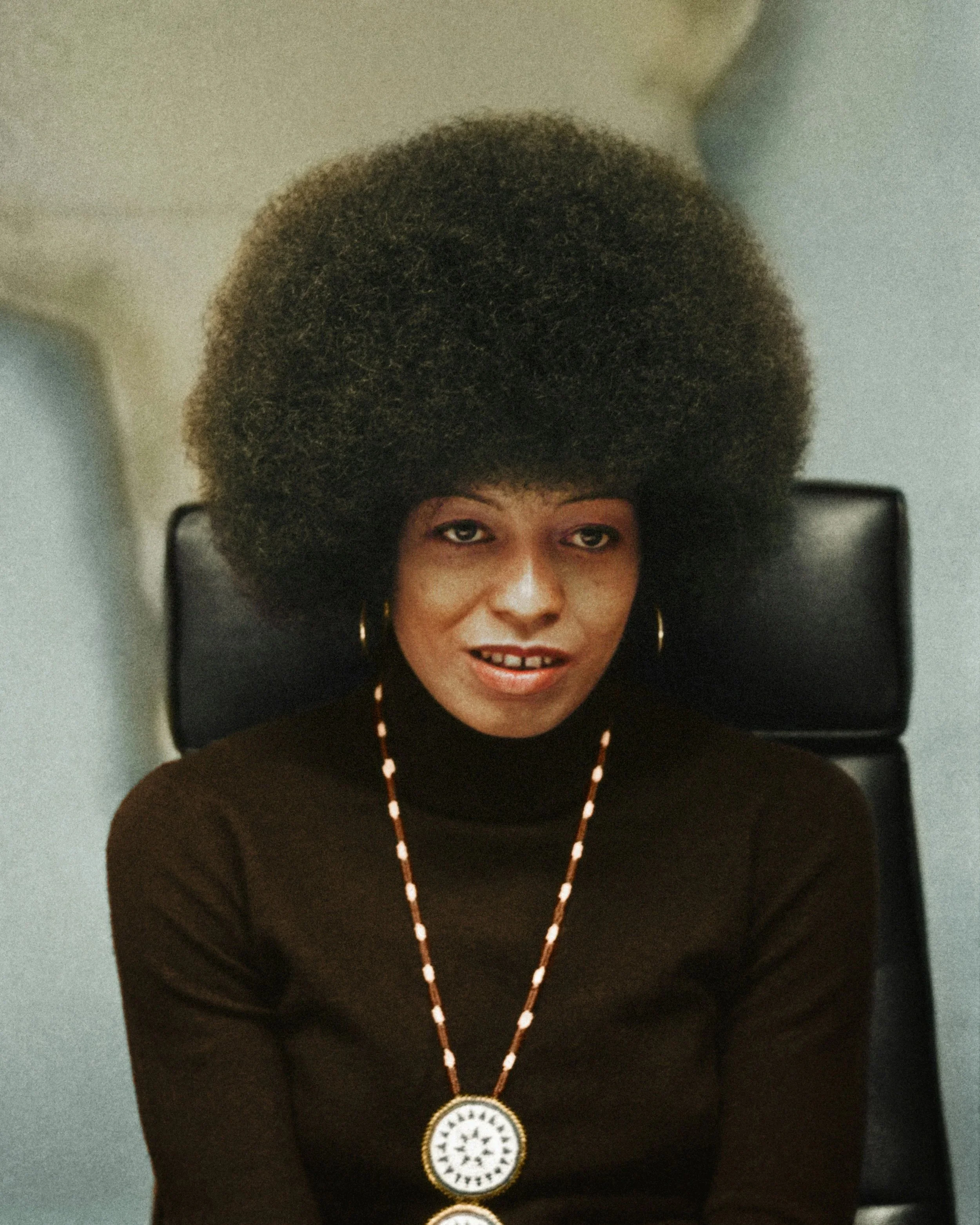
Activist Angela Davis wearing her afro. Courtesy of Unsplash
The Civil Rights Movement and the movements that followed challenged century-old ideas and laws that discriminated against African Americans and deprived them of their rights. It is important to note that the clothing of these movements was not simply fashion choices, but that they were influenced by the generational turmoil, the anguish, and the complicated politics of reshaping a nation cursed by centuries worth of injustice. By examining the clothing of the movements, we can peer into the lives and perspectives of those who dared to challenge the injustice of their time, and those whose legacies continue to endure today.